
Sectors throw up a wishlist for the Finance Minister.

This was a fresh probe based on the inspection of certain derivative contracts both on the BSE and NSE.

LIC's public offer, the country's biggest-ever IPO, saw the policyholders' portion being oversubscribed on the first day itself on Wednesday, though overall subscription stood at just 66 per cent. The government aims to generate about Rs 21,000 crore by selling 3.5 per cent stake in the insurance behemoth. The LIC initial public offering (IPO), open for retail and institutional investors, is set to close on May 9. The issue period also includes bidding on Saturday, May 7.

Smaller stocks continue to shine at the bourses. The BSE MidCap index is up 18 per cent since the beginning of January this year against a 5 per cent rise in the Sensex during the period. With the current rally, the mid-cap index has doubled in value since the end of March 2020 against a 70 per cent rally in the Sensex during the period. On Tuesday, the mid-cap index closed at 21,232, as compared to 17,941 at the end of December 2020. In the same period, the benchmark index moved from 47,751 to 50,193.

Debt-ridden Vodafone Idea (VIL) has decided to opt for converting about Rs 16,000 crore interest dues liability payable to the government into equity which will amount to around 35.8 per cent stake in the company, as per a regulatory filing of the telecom firm. If the plan goes through, the government will become the biggest shareholder in the company which is reeling under a debt burden of about Rs 1.95 lakh crore. "...the board of directors, at its meeting held on 10th January 2022, has approved the conversion of the full amount of such interest related to spectrum auction instalments and AGR dues into equity.

The largest stock bourse in the country, NSE on Wednesday said trading across segments came to a halt at 11.40 am due to connectivity issues.
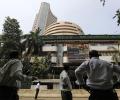
Bajaj Finserv was the top gainer in the Sensex pack, rallying nearly 7 per cent, followed by Bajaj Finance, Axis Bank, Reliance Industries and IndusInd Bank.
Nikunj Saraf, Vice President Choice Wealth, answers your queries.

The exchange cited issues with its telecom service providers that prevented stocks and index quotations from getting updated.
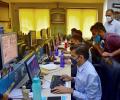
SBI was the top gainer in the Sensex pack, jumping around 3 per cent, followed by Kotak Bank, Axis Bank, Bajaj Auto, Tech Mahindra, UltraTech Cement and PowerGrid. NSE Nifty rose 36.40 points to 15,337.85.

Maruti was the top loser in the Sensex pack, shedding around 4 per cent, followed by Bharti Airtel, HUL, NTPC, Bajaj Finance, UltraTech Cement, ONGC and Reliance Industries. NSE Nifty declined 224.50 points to 14,324.90.


Nikunj Saraf, Vice President Choice Wealth, answers your queries.

L&T was the top gainer in the Sensex pack, spurting over 6 per cent, followed by Hero MotoCorp, HDFC Bank, IndusInd Bank, Maruti, HDFC and HCL Tech. On the other hand, ITC, SBI and Bharti Airtel ended in the red.

Aditya Puri has a higher yearly pay of 9.7 crore, plus stock options, at HDFC Bank.

In a curious move, Reliance Industries' (RIL) executive director and Mukesh Ambani's trusted aide PMS Prasad pledged 600,000 shares of the company last month, which is 93.75 per cent of the total shares he owns in RIL. Prasad owned a total of 640,000 RIL shares and his compensation stood at Rs 11.15 crore in FY20.

Earlier this year, the Union Cabinet gave the management of state-run companies the freedom to decide on divesting their subsidiaries. However, the very next day a meeting was held at the top level of the Government of India, for the presentation of proposals for more autonomy for state-run companies. Interestingly, no chiefs of any of these companies were invited. It is a problem that will stare the government in the face with the state-owned banks too, as talks have again begun for inviting strategic investments in these companies.

Three firms, Vishvapradhan Commercial Pvt Ltd along with AMG Media Networks and Adani Enterprises Ltd, have offered a price of Rs 294 for the acquisition of up to 1,67,62,530 fully paid-up equity shares of NDTV having a face value of Rs 4 from the public shareholders.

L&T was the top loser in the Sensex pack, dropping 4.99 per cent, after the engineering major posted a 45 per cent decline in consolidated net profit for the September quarter. Titan, ONGC, Axis Bank, HUL, NTPC, M&M and HDFC were the other major laggards, shedding up to 3.32 per cent. NSE Nifty fell 58.80 points or 0.50 per cent to 11,670.80.

The RBI's financial stability report has on Wednesday highlighted the disconnect between the real economy and equity market yet again. The central bank observed that Indian equities were trading at rich valuations, with several metrics such as price to earnings multiples, price to book ratio, market cap to GDP and the cyclically adjusted P/E ratio, or Shiller P/E, at above historical averages. For instance, as on December 13, the one-year forward P/E ratio for India was 35.1 per cent, above its 10-year average, and one of the highest in the world.
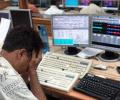
On the Sensex chart, Axis Bank, Titan, IndusInd Bank, HDFC Bank, Dr Reddy's, HDFC and Asian Paint were major losers.
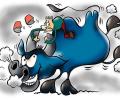
SBI was the top gainer in the Sensex pack, rallying over 10 per cent, followed by Kotak Bank, Dr Reddy's, UltraTech Cement, ITC and HDFC Bank. On the other hand, Axis Bank, Bharti Airtel, ICICI Bank, Maruti and HCL Tech were among the laggards.

L&T was the top gainer in the Sensex pack, rising over 3 per cent, followed by Bajaj Finance, Reliance Industries, IndusInd Bank, SBI and HDFC Bank. NSE Nifty surged 168.05 points to 14,653.05.

The Russian Direct Investment Fund (RDIF) and Dr Reddy's Laboratories have agreed to cooperate on clinical trials and distribution of Sputnik V vaccine in India, RDIF and Dr Reddy's said in a joint statement.
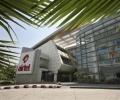
Telecom operator Bharti Airtel on Friday said it has signed an agreement to buy Vodafone's 4.7 per cent stake in Indus Towers on the condition that the proceeds will be used for investment in Vodafone Idea and clearing its dues towards the mobile tower company. Debt-ridden Vodafone Idea (VIL) has been unable to pay dues to Indus Towers and both VIL and promoter Vodafone have proposed a payment plan to clear the outstanding amount by July 15. In the meantime, VIL has committed to pay certain minimum amount each month to Indus Towers.

In the Sensex pack, gainers included HCL Tech, SBI, ITC, Bharti Airtel, Sun Pharma, Yes Bank, Axis Bank, TCS, Asian Paints, ICICI Bank, TCS, Bajaj Finance and Infosys, jumping up to 3.84 per cent.

Bharti Airtel was the top loser in the Sensex pack, dropping 2.23 per cent, followed by Reliance Industries, L&T, Sun Pharma, HDFC Bank, Maruti, Titan and Kotak Bank.

Axis Bank was the top gainer in the Sensex pack, soaring over 13 per cent, followed by ICICI Bank, HDFC Bank, IndusInd Bank and Bajaj Finance. On the other hand, Sun Pharma, UltraTech Cement, Titan and Asian Paints were among the laggards.

The company said the drug will be made available across India through the group's strong distribution chain reaching out to government and private hospitals treating COVID-19 patients.
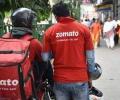
Technology start-ups that got listed in the last few quarters reported a hit to their December-quarter (Q3FY22) profitability due to higher marketing and employee costs. While fintech firms Paytm and PB Fintech saw their losses widen by 45 per cent year-on-year (YoY) to Rs 778 crore and 55 per cent to Rs 295 crore, respectively, food delivery company Zomato remained in the red despite narrowing its net loss by 81 per cent to Rs 66 crore. Meanwhile, online fashion and beauty products seller Nykaa saw its net profit drop 59 per cent to Rs 28 crore in Q3FY22.

Apart from a stake buy, some other options on the table include a merger of the entertainment businesses of Sony and Network18 Media.
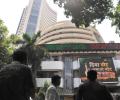
After a positive opening, the 30-share BSE Sensex suddenly faced selling pressure in late-afternoon trade. It finally settled just 5.67 points, or 0.01 per cent, lower at 39,586.41.

Five key capital market announcements from the previous Budget.

Top laggards among the Sensex pack included Yes Bank, SBI, HDFC, Axis Bank, Kotak Bank, ITC, RIL, M&M, Tata Motors and ICICI Bank, losing up to 3.61 per cent.

India's stock exchanges have decided to jointly introduce the T+1 settlement cycle in phases from February 25, beginning with the bottom 100 stocks by market capitalisation. From March 2022, on the last Friday (or the immediate next trading day) of every month, the next 500 stocks from the bottom will be subject to T+1 settlement. The phase-wise implementation is expected to give all market participants, including foreign portfolio investors (FPIs), ample time to shift to the shorter cycle. The settlement cycle represents the time period within which the stock exchanges have to settle security transactions.

After opening higher, the markets continued to trade in the positive zone in the afternoon session as traders were encouraged by RBI governor Shaktikanta Das's statement that the new resolution framework is expected to give durable relief to borrowers amid the Covid-19 crisis, said Narendra Solanki, head-equity research (fundamental), Anand Rathi.

Reliance Industries was the biggest loser in the Sensex pack, falling 2.62 per cent, followed by Nestle India, IndusInd Bank, UltraTech Cement, M&M and SBI.
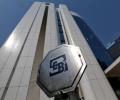
Securities and Exchange Board of India (Sebi) chairman Ajay Tyagi on Thursday defended the recent reforms announced by the regulator, such as peak margin norms and shortening of the trade settlement cycle, saying they were in the interest of investors. The moves were criticised by the broking community and the foreign portfolio investors (FPIs). Speaking to the media after his inaugural address at the CII Financial Markets Summit, Tyagi said: "The new peak margin norms are in everyone's interest.
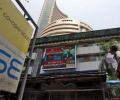
The broader NSE Nifty soared 133.10 points, or 1.22 per cent, to end at 11,573.30.

A key trigger for the increased retail participation in equities has been the lockdown triggered by Covid-19 that saw investors channelising their savings to capital markets in search of better return on their investments and the need to increase their disposable income.
 © 2026 Rediff.com - Investor Information - Advertise with us - Disclaimer - Privacy Policy - Sitemap - Feedback - About us - Terms of use - Grievances